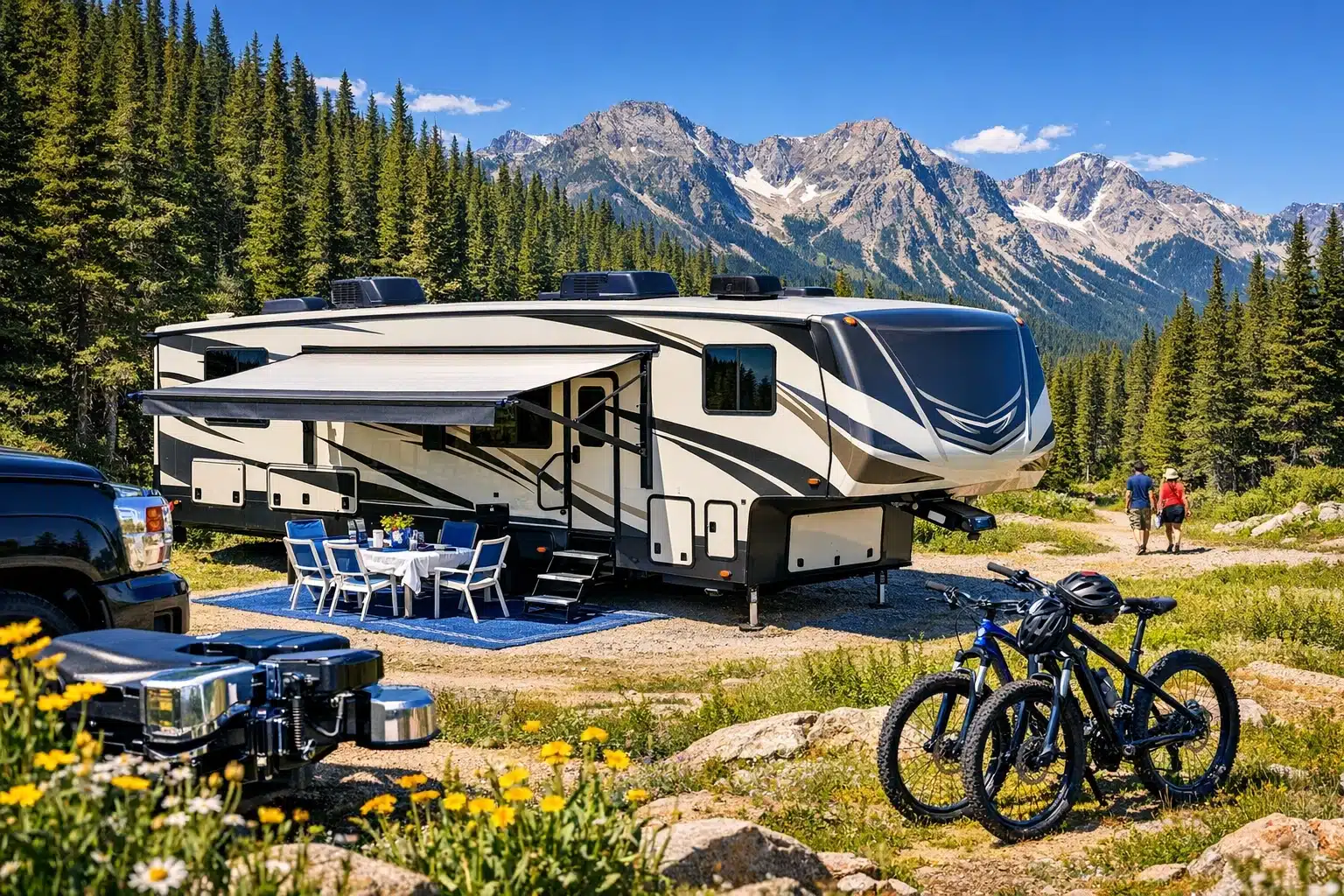
Why wait for a factory build? Explore our curated selection of premium used campers, each inspected through a 150-point process to help you get on the road sooner.
The used-camper market sits at the crossroads of adventure and arithmetic. One listing might promise sunset dinners by a lake, while another hides water damage behind polished cabinet doors. Because prices, layouts, and conditions vary so widely, buyers need more than enthusiasm; they need a method. Understanding how to compare age, mileage, maintenance, and livability can make the difference between a satisfying purchase and an expensive lesson.
Article Outline
This guide moves through five practical stages so readers can evaluate a used camper with confidence rather than guesswork.
• Why so many buyers choose used campers, and how the different camper types compare.
• How to inspect structure, appliances, electrical systems, tires, and service records.
• What the real cost of ownership looks like beyond the sticker price.
• How to match floor plans and features to your travel style while avoiding common seller traps.
• A conclusion focused on turning research into a confident purchase decision.
1. Why a Used Camper Makes Sense for Many Buyers
A used camper appeals to a broad range of buyers for one simple reason: it often offers more vehicle for the money. In many RV categories, the sharpest depreciation happens early in a unit’s life. That means a camper that is two to five years old may still feel modern, but cost meaningfully less than a factory-fresh equivalent. For budget-conscious travelers, that gap can translate into real flexibility. Money not spent on the initial purchase can go toward campsite fees, upgraded batteries, a better hitch, storage, or the first long trip that justifies the purchase in the first place.
There is also a timing advantage. New campers may involve factory queues, shipping delays, dealer prep time, and option packages that stretch the wait. A used camper, by contrast, exists in the market right now. You can inspect it, compare it with similar listings, and in many cases start traveling within days or weeks rather than months. For buyers who are trying to make use of a short camping season, that speed matters.
Used does not mean one thing, of course. The term covers a wide field, and the right choice depends on how you travel.
• Pop-up campers are compact, light, and usually easier to tow, but they offer less insulation and fewer hard-sided comforts.
• Travel trailers come in the widest variety of lengths and layouts, making them popular for couples and families.
• Fifth wheels usually provide more living space and storage, but they require a compatible pickup and a special hitch.
• Truck campers suit people who want a smaller footprint and better maneuverability.
• Motorized campers and camper vans can be convenient on the road, though maintenance becomes more complex because the house and vehicle systems live together.
The best used-camper purchase is not always the cheapest unit on the lot. Value depends on condition, design, and fit. A modest trailer with dry walls, reliable appliances, and a practical layout may be a far better buy than a larger model with slide issues or hidden leaks. This is why experienced shoppers compare more than price. They ask how the camper was stored, whether it was winterized correctly, how often the roof was resealed, and whether any major systems have been repaired.
In a way, shopping used is like reading a travel journal written in hardware. Every worn latch, replaced tire, and upgraded solar controller tells part of the story. If the story is well kept, a used camper can offer an efficient path to ownership, letting buyers skip the longest wait and focus on what drew them in to begin with: getting on the road.
2. How to Inspect a Used Camper Without Missing the Important Stuff
Inspection is where excitement has to slow down and give way to discipline. A used camper can look clean in photos and still carry expensive problems under trim, sealant, or flooring. Water intrusion is the most serious concern in many towable RVs, because leaks can damage framing, insulation, and subfloors long before a stain becomes obvious. Start outside. Look closely at the roof edges, corner seams, ladder mounts, vents, windows, and any place sealant has been applied. Cracked, brittle, or uneven sealant is not an automatic deal-breaker, but it deserves closer attention.
Inside the camper, open cabinets and smell the air. A musty odor can point to past or current leaks. Press gently around windows, under beds, in storage compartments, and near the shower skylight or front cap. Soft spots in walls or floors should make you stop and investigate further. Cosmetic touch-ups can hide trouble, so look for mismatched paneling, fresh caulk in isolated places, or flooring that appears newer than the surrounding interior.
Mechanical and utility systems matter just as much. Ask to see everything operate, not just power on.
• Test the refrigerator on shore power and, if applicable, propane.
• Run the air conditioner and furnace long enough to confirm stable operation.
• Turn on the water pump and inspect for drips under sinks and near the water heater.
• Check all lights, outlets, USB ports, and the converter or inverter display.
• Verify that the awning extends smoothly and that stabilizers or jacks work correctly.
• Inspect propane lines, regulator condition, and tank certification dates where relevant.
Tires deserve special attention because age can matter as much as tread. Many RV technicians advise close inspection and replacement planning once tires approach about six years old, even if they still look usable. Read the DOT date code. Also check suspension parts, brakes, wheel bearings, and frame rust. If the camper is motorized, add an automotive inspection that includes engine service history, brakes, suspension, transmission behavior, and signs of accident repair.
Paperwork completes the picture. A good inspection includes ownership documents, maintenance receipts, VIN verification, manuals, and evidence of recalls being addressed. If you buy from a dealer, ask what their inspection process actually includes. A 100-point or 150-point checklist sounds reassuring, but the written findings matter more than the number itself. Was moisture tested? Were appliances run? Were roof seams checked? Did a technician document deficiencies or only note that the unit was cleaned?
The goal is not perfection. Every used camper will show some age. The goal is clarity. When you know what works, what needs attention, and what may become expensive, you can make a decision based on reality rather than shine.
3. The Real Cost of a Used Camper: Budgeting Beyond the Purchase Price
The listed price is only the front door of the budget. Once buyers step through it, they meet the rest of the household: insurance, registration, maintenance, storage, towing equipment, and those small upgrades that seem harmless one by one. A used camper can still be an economical choice, but only if the full cost of ownership is understood before the paperwork is signed.
Start with the vehicle itself. If financing is involved, compare the total cost over the loan term rather than focusing only on the monthly payment. A lower monthly figure can hide a longer term or higher interest cost. Insurance varies by camper type, value, usage pattern, and location. Registration rules also differ widely by state or region, so buyers should look up actual local fees instead of relying on rough estimates from listings.
Then comes compatibility. A travel trailer that seems affordable can become expensive if your current vehicle cannot tow it safely. Tow rating is only one part of the equation. Payload, hitch weight, brake controller requirements, and wheelbase stability all matter. Buyers sometimes discover late in the process that they need a weight-distribution hitch, towing mirrors, upgraded tires on the tow vehicle, or even a different truck. Suddenly the “good deal” has grown a longer tail.
Recurring operating costs add more texture to the budget.
• Seasonal storage can be minor in rural areas or significant in cities.
• Routine upkeep includes roof resealing, battery replacement, tire replacement, bearing service, brake checks, and winterization supplies.
• Campsite fees vary from simple public sites to full-hookup private parks.
• Fuel use generally rises when towing, especially with taller or heavier campers.
• Repairs can range from a loose drawer slide to appliance replacement or structural resealing.
A practical way to budget is to divide spending into three buckets: purchase, immediate post-purchase work, and annual ownership. For example, a used camper may need new tires, a fresh battery, upgraded mattress, surge protector, sewer hoses, leveling blocks, and kitchen basics within the first month. None of these items is dramatic on its own, but together they can add a meaningful amount to the initial outlay.
Smart buyers also leave a repair cushion. Even well-cared-for campers can surprise new owners with a failed water pump, stubborn slide motor, or aging converter. Think of it less as pessimism and more as a travel buffer. The open road feels freer when the budget is not stretched to its final inch. A used camper can absolutely cost less than buying new, but its strongest advantage appears when shoppers account for the complete ownership picture, not just the sticker in the window.
4. Matching the Right Used Camper to Your Lifestyle and Shopping Smarter
Choosing a used camper is not only about condition; it is about fit. A beautifully maintained unit can still be the wrong purchase if its layout clashes with your habits. This is why thoughtful buyers picture real trips, not showroom fantasies. Where will you sleep? How will you cook? Will you travel for two nights at a time or for weeks? Are you planning campground stays with hookups, or do you want off-grid capability with solar, batteries, and large water tanks? These questions shape the answer far more than a stylish backsplash or a television mounted at a flattering angle.
Floor plan matters every day you own the camper. A rear bath might feel spacious to one couple and wasteful to another. Bunk beds can be ideal for families but unnecessary weight for empty nesters. A dinette is useful only if someone actually likes sitting there. Likewise, a large outdoor kitchen may be exciting in a listing, yet add complexity and consume storage that some owners would rather keep for tools, chairs, or bikes.
Shopping smarter also means evaluating who is selling the camper and how transparent they are. Private sellers may offer a better price and direct knowledge of how the camper was used. Dealers may offer financing options, trade-in convenience, and some level of inspection or reconditioning. Neither route is automatically safer. The key difference is documentation and openness.
Ask targeted questions that reveal the unit’s history.
• How was the camper stored: indoors, covered, or exposed year-round?
• Has it ever had water damage, delamination, roof repairs, or floor repairs?
• Which appliances or components have been replaced?
• Are there service records, winterization receipts, or warranty repair documents?
• Why is it being sold now?
• What accessories are included, and which are staying with the seller?
Compare multiple listings before acting. Looking at several campers in the same category helps buyers identify normal wear versus suspicious neglect. It also sharpens pricing judgment. If one unit is priced significantly below similar models, there may be a reason beyond a motivated seller. On the other hand, an older camper with documented service, recent tires, resealed roof seams, and upgraded batteries may justify a higher price because some costly near-term work has already been done.
Negotiation works best when it is specific and calm. Instead of saying, “Can you do better?” point to facts: tire age, resealing needs, appliance faults, missing accessories, or a weak battery. Concrete observations lead to more credible price discussions. Buying a used camper is a little like choosing a travel partner. You want something you can trust when the weather turns, the road gets rough, and the nearest repair shop is still many miles away.
5. Conclusion: A Clearer Path to the Right Used Camper
For the buyer standing at the edge of the market, a used camper can be a practical and rewarding move. It may reduce the wait associated with new builds, soften the impact of early depreciation, and open access to layouts or features that would otherwise cost far more. Still, the real advantage does not come from buying used by itself. It comes from buying used carefully. A camper that fits your travel habits, shows honest maintenance, and passes a thorough inspection will usually serve you better than a newer-looking unit chosen in a rush.
The strongest shoppers combine curiosity with patience. They look past polished photos, ask for records, test every system they can, and compare several options before deciding. They know that a fair price is only one part of a good deal. The other parts are structural soundness, manageable ownership costs, and a layout that supports the way they actually camp. If you travel solo, your priorities will differ from those of a family of five. If you prefer simple state-park weekends, you may not need the same battery bank, tank capacity, or luxury features sought by someone planning long off-grid stays.
Before making a final choice, it helps to return to a short decision checklist.
• Does the camper show signs of past or active water intrusion?
• Can you verify the condition of tires, battery, brakes, roof sealant, and appliances?
• Does the weight work with your current tow vehicle or driving plans?
• Have you budgeted for insurance, registration, storage, and immediate upgrades?
• Does the layout make sense for the number of people and style of travel involved?
• Are the title, VIN, service records, and seller disclosures consistent and complete?
If those answers line up, the decision becomes much less mysterious. At that point, you are not merely buying a used camper; you are choosing a tool for future weekends, road miles, rainstorms, breakfasts at trailheads, and those oddly satisfying evenings when a small lamp inside a parked trailer feels more welcoming than a hotel hallway. For readers actively shopping now, the message is simple: take your time, inspect deeply, budget honestly, and choose the camper that fits your real life. The road will still be there when you are ready, and it is far more enjoyable when your purchase has been made with open eyes.