The Savvy Buyer’s Guide to Unsold Garden Sheds: Quality Meets Value
An unsold garden shed can be more than leftover stock at the edge of a showroom. For buyers who care about function, price, and durability, it often represents a practical shortcut to better value. These sheds may include end-of-season inventory, cancelled orders, display models, or overbuilt units waiting for the right garden. Understanding how to assess condition, materials, delivery terms, and long-term use can turn a hesitant purchase into a smart upgrade for outdoor life.
Outline: this article covers why unsold garden sheds deserve attention, how different materials and designs compare, what to inspect before paying, how to judge true cost rather than sticker price, and how to choose a shed that fits your garden, your routine, and your expectations over time.
1. Why Unsold Garden Sheds Deserve a Closer Look
When people hear the phrase unsold garden shed, they often imagine something unwanted, flawed, or strangely abandoned. In reality, that assumption misses how outdoor retail works. A shed can remain unsold for reasons that have little to do with quality. It may be a seasonal overstock item from spring, a customer cancellation after a change in landscaping plans, a display model that drew plenty of admiration but no immediate buyer, or a size that simply did not match local demand. In the right context, that overlooked unit can become a very sensible purchase.
Garden sheds serve a wide range of functions, and demand changes with weather, property size, and household priorities. A small 6×4 shed may move quickly in urban areas where gardens are compact, while a larger 10×8 model may sit longer because fewer buyers have the available footprint. That slower sales cycle does not automatically signal poor construction. It often signals a mismatch between stock and timing. For the buyer, this creates opportunity. Retailers and dealers may want to free up display space, reduce storage costs, or clear older inventory before new collections arrive. That pressure can lead to discounts, bundled delivery, or flexible installation terms.
There is also a psychological advantage to shopping unsold inventory. A brand-new catalog product can tempt buyers into paying for aesthetics they do not need. An unsold unit encourages sharper thinking. You begin to ask better questions: Does the roof pitch suit my climate? Are the doors wide enough for a mower? Is the floor strong enough for shelving and tools? In that sense, the purchase becomes less about chasing novelty and more about matching form to use. That is usually where lasting value lives.
Several common reasons explain why a shed remains available:
• End-of-season stock that missed the peak buying window
• Cancelled customer orders before delivery
• Display models with minor cosmetic wear
• Overstocked sizes or colors
• Units held back due to transport scheduling or site preparation issues
For homeowners, renters with permission, allotment users, and hobby gardeners, the important lesson is simple: unsold does not mean unsuitable. It means the burden of careful evaluation shifts to the buyer. If you inspect wisely and compare honestly, an unsold shed can offer the same structural usefulness as a newly listed model, often at a more favorable price. Like a sturdy wheelbarrow left in the corner after the rush has passed, it may simply be waiting for someone practical enough to recognize its worth.
2. Materials, Build Quality, and Design: What Actually Matters
A shed should not be judged by price alone, because the long-term performance of the structure depends heavily on materials and construction details. The three most common shed materials are timber, metal, and resin or plastic, and each has distinct strengths. Choosing between them is less about trends and more about climate, maintenance tolerance, intended use, and the character of the garden itself.
Timber sheds remain popular because they look natural, blend well with planting schemes, and are easy to customize. Shelves, hooks, windows, workbenches, and insulation can usually be added without much difficulty. Pressure-treated timber is especially appealing because it resists rot better than untreated wood, and many manufacturers in the market offer anti-rot coverage for a number of years when care instructions are followed. That said, wood needs periodic attention. Even a well-made timber shed benefits from checking the felt roof, sealing exposed areas, and making sure the base stays dry. Timber thickness also matters. Thicker cladding and sturdy framing generally provide better stability than thin overlap panels, especially in windy locations.
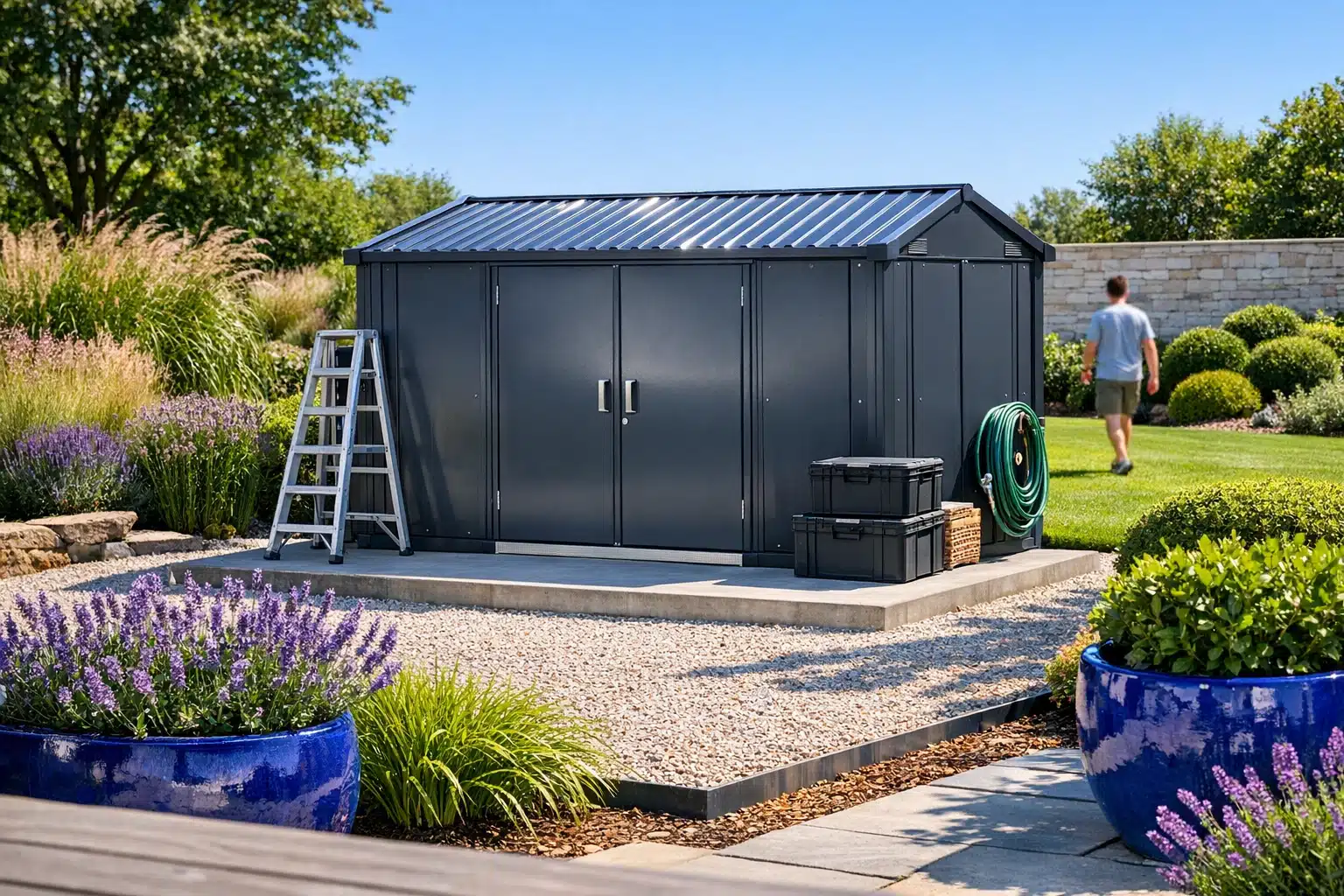
Metal sheds are often chosen for security, low maintenance, and resistance to insects or rot. Galvanized steel is common, and the quality can vary widely. A thin metal panel may look neat in a photo yet feel flimsy in bad weather, while a heavier-gauge structure with reinforced corners will perform much better. Metal can also suffer from condensation if ventilation is poor, which matters if you plan to store power tools, bicycle parts, paint, or paper goods. A shed that keeps rain out but traps moisture inside is only solving half the problem.
Resin sheds have grown in popularity because they are easy to clean, resist rust, and generally require little routine maintenance. Higher-quality resin models can imitate painted wood surprisingly well. They are particularly useful for buyers who want straightforward storage without seasonal upkeep. However, not all resin sheds are equally robust. UV resistance, panel rigidity, and floor strength should be checked closely, especially if heavy equipment will be stored inside.
Beyond material choice, construction details deserve close attention:
• Floor thickness and weight capacity
• Framing strength at corners and door openings
• Roof shape and drainage performance
• Quality of hinges, handles, locks, and window fittings
• Ventilation points that reduce trapped moisture
• Door width for wheelbarrows, mowers, and bicycles
An attractive shed can charm from a distance, but durability reveals itself in the less glamorous details. Look at how panels join, whether fasteners are properly aligned, and how the roof edge is finished. A reliable shed should feel composed rather than fragile. Think of it as a small building, not a garden accessory. Whether it is destined to hold seed trays, hand tools, or the beginnings of a weekend workshop, the best unit is the one whose structure quietly supports daily life without demanding constant rescue.
3. How to Inspect an Unsold Shed Before You Buy
Buying an unsold garden shed is a little like buying a floor model sofa or a cancelled kitchen order: the savings can be real, but the inspection must be sharper. Since unsold stock may include display units, previously reserved builds, or older inventory held in storage, the condition can range from virtually new to lightly worn. A proper assessment helps separate genuine value from a future repair bill wearing a discount tag.
Start with the reason the shed is unsold. This should be one of your first questions, not an afterthought. A cancelled order may mean the shed has never been erected. A display model may have been assembled for months, exposed to sunlight, rain, and countless curious hands pulling the door open. Neither option is automatically bad, but each carries different risks. Older boxed stock might have warped timber if stored badly. A display model may show cosmetic marks, faded roofing felt, or minor alignment issues from repeated use.
Then inspect the structure methodically. Check the roofline first. A roof that sags, dips, or looks uneven could signal weak framing or poor assembly. Examine doors and windows for smooth operation. Sticking doors are not always a deal-breaker, especially if the shed has been standing on an uneven surface, but they should prompt further questions. Look at the floor carefully. This is where value often hides or disappears. If the floor feels soft, flexes under weight, or shows edge deterioration, you may face reinforcement work soon after delivery.
Use a practical checklist:
• Are all panels present and free from splits, dents, or distortion?
• Has any timber been exposed to persistent damp?
• Are screws, brackets, hinges, and handles included?
• Does the roof covering still look sound and properly fixed?
• Is the glazing intact and secure?
• Are instructions, warranty terms, and anchoring parts available?
• Will the seller provide replacement parts if something is missing?
You should also ask about delivery, installation, and after-sales support. A shed that looks inexpensive can become less appealing once transport fees, crane access, base preparation, and installation charges are added. If the seller offers assembly, clarify whether the price includes leveling the site, sealing the roof, or anchoring the structure. For larger sheds, this matters a great deal. A poorly installed premium shed may underperform, while a modest model set on a proper base can remain dependable for years.
Finally, keep perspective on cosmetic flaws. A small scratch, a scuffed threshold, or slight fading on a display model may justify a discount without harming usefulness. What matters most is structural integrity, completeness, and suitability for your needs. Buying well is not about finding perfection in a warehouse corner. It is about identifying which imperfections are harmless, which defects are negotiable, and which warnings should send you walking back through the gate.
4. Price, Negotiation, and the True Cost of Ownership
The headline price of an unsold garden shed can be appealing, but smart buyers know that the sticker tells only part of the story. A shed is not just a product. It is a structure that needs transport, a proper base, possible installation, future maintenance, and enough durability to justify the space it occupies. Comparing two offers without factoring in those elements is like comparing seed packets without considering soil, weather, or watering. The numbers may look clear at first glance, yet the real outcome depends on what happens after the purchase.
Begin with the base price and ask what it includes. Some sellers list a low amount for the shed alone, then add delivery fees, assembly costs, anchoring kits, shelving packs, pressure treatment upgrades, or disposal charges for packaging. Others may offer a display model at a higher price but include setup and a limited warranty. In many cases, the better deal is the one with fewer surprises rather than the one with the smallest opening figure.
Negotiation is often possible with unsold stock, especially if the unit takes up yard space or has visible cosmetic wear. Retailers may be more flexible when a model has been on display for a long period or when new seasonal inventory is arriving. That does not mean buyers should push carelessly. A respectful, informed conversation usually works better than aggressive bargaining. If you can point to a faded roof covering, minor panel marks, or the lack of original packaging, you have a concrete basis for asking about price movement or extras.
Useful areas for negotiation include:
• Reduced delivery or installation fees
• Inclusion of a floor kit or shelving
• Replacement roofing felt for a display model
• Extra treatment or protective coating for timber sheds
• Removal of an old shed from the site
• A written note of any warranty coverage that still applies
It also helps to estimate ownership cost over several years. A timber shed bought cheaply may still prove excellent value if you are comfortable with occasional maintenance. A resin shed with a higher upfront price may cost less in effort over time. A thin metal shed may save money today but disappoint in severe weather if reinforcement is poor. Matching the material to your lifestyle is often more important than squeezing out the last possible discount.
One more point deserves attention: the cost of getting the wrong size. Buyers sometimes choose a bargain shed that does not fit the intended job, then spend additional money on outdoor storage benches, tarpaulins, or replacement shelving because capacity runs out. Measure before you negotiate. Think about current needs and likely future use. Gardening tools tend to multiply with quiet determination. A spare trimmer becomes a mower, the mower attracts fuel cans and extension cords, and suddenly the neat little bargain feels like a packed cupboard. Real value comes from a shed that serves well over time, not merely one that leaves the showroom cheaply.
5. Matching the Right Shed to Your Garden: Final Advice for Practical Buyers
The best unsold garden shed is not simply the lowest-priced model or the most attractive structure on a dealer’s forecourt. It is the one that fits the rhythm of your outdoor life. Before making a final decision, step back and think about the role the shed will play over the next five to ten years. Will it store tools and compost neatly out of sight? Will it double as a potting area in spring? Will it hold bicycles, outdoor cushions, or a small workbench? A clear answer makes every other choice easier, from material and layout to door style and placement.
Start with location. A shed should sit on a stable base, usually concrete, paving slabs, or a properly prepared timber frame, depending on the design and local conditions. Ground contact, poor drainage, and persistent shade can shorten the life of a shed, especially timber models. If the chosen spot sits under overhanging branches, roof maintenance may become more frequent. If the area is exposed to strong wind, anchoring and structural strength matter even more. Access matters too. A shed that is technically spacious but awkward to reach will not feel helpful in daily use.
Think carefully about dimensions and internal layout:
• Small gardens often benefit from taller sheds with shelving potential
• Wide double doors suit mowers, bikes, and bulky bins
• Windows help if the shed will be used as a hobby space
• Ventilation is important where moisture, paint, or stored fabrics are involved
• Strong flooring is essential for heavy equipment and work surfaces
Appearance has a role as well. A shed can anchor a garden visually, either blending into fences and planting or acting as a tidy focal point. Timber often suits traditional gardens, while resin and metal can work well in contemporary spaces. Even so, appearance should follow function. A charming shed that cannot hold the essentials will eventually become an obstacle dressed as a feature.
For buyers considering unsold inventory, the final rule is simple: stay practical, not suspicious. An unsold shed is not a mystery to fear, nor a bargain to grab blindly. It is a product that deserves patient evaluation. Ask why it is available, inspect it carefully, compare full costs, and match it honestly to the way you live. If you do that, you may end up with something especially satisfying: a garden structure that was overlooked by the crowd yet perfectly suited to your corner of the world. For homeowners, hobby gardeners, and careful improvers alike, that is where quality meets value in a way that feels grounded, useful, and genuinely worth bringing home.