Male Wellness Devices: What Men Should Know
Men’s wellness devices sit at the crossroads of health, comfort, recovery, and intimate care, which is why the category now reaches far beyond basic fitness trackers. A smart ring can reveal fragmented sleep, a massage tool can calm post-workout soreness, and a medically designed vacuum device may support sexual health when used correctly. The shared promise is not magic, but better feedback, steadier routines, and practical support for daily well-being.
Article outline:
• what male wellness devices actually include
• daily monitoring tools and what their data means
• recovery devices for pain, stiffness, and training fatigue
• pelvic, urinary, and intimate wellness products
• how to choose safely, avoid gimmicks, and know when medical advice matters
1. Understanding Male Wellness Devices and Why the Category Matters
The phrase “male wellness devices” can sound vague at first, but in practice it describes a broad group of products designed to support physical health, recovery, stress management, pelvic function, and intimate well-being. Some are familiar, such as smartwatches and massage guns. Others are more specialized, including pelvic floor trainers, biofeedback tools, and medically regulated devices used to support erectile function or recovery after treatment. The big shift is that men are no longer shopping only for performance. More are looking for prevention, convenience, and privacy.
That matters because men often delay care. In many countries, men are less likely than women to seek preventive health support early, especially for sleep problems, stress, bladder symptoms, sexual health concerns, or persistent pain. Devices cannot replace a clinician, but they can lower the first barrier. A sleep tracker can reveal a pattern worth discussing with a doctor. A blood pressure monitor can turn a vague worry into a measurable trend. A pelvic health device can make a hard-to-start conversation feel more manageable. In that sense, good technology acts like a flashlight, not a cure: it helps men see what is going on more clearly.
It also helps to separate device types into three practical groups:
• consumer wellness devices, such as rings, watches, and massage tools
• medical or medically adjacent devices, such as home blood pressure monitors or vacuum erection devices
• hybrid devices, often app-connected, that promise coaching, biofeedback, or training support
The distinction is important because marketing often blurs the lines. A consumer device may be useful for habit building without being precise enough for diagnosis. A medical device may have stronger evidence behind it, but still require careful instructions and realistic expectations. And hybrid products often live in the gray area where the design feels scientific, yet the claims are much bolder than the evidence. If the packaging sounds like it belongs in a superhero movie, that is usually your cue to slow down.
A smart approach starts with purpose. Are you trying to improve sleep consistency, ease muscle tension, monitor a chronic issue, or support intimate health after a specific concern? The answer should shape the device, not the other way around. Buying a tool first and inventing a problem later is how expensive drawer collections are born. When chosen well, male wellness devices can be genuinely helpful. When chosen badly, they become polished clutter with a charging cable.
2. Daily Health Technology: Wearables, Sleep Trackers, and Biofeedback Tools
If one category has normalized wellness tech for men, it is the wearable. Smartwatches, smart rings, chest straps, connected scales, and app-linked blood pressure cuffs have moved from niche gadgets to everyday companions. Their value comes from pattern recognition. One rough sleep score means little on its own, but four weeks of shortened sleep, elevated resting heart rate, and lower activity can tell a useful story. The same applies to stress markers, recovery estimates, and heart rate variability trends. These tools are often most helpful when they reveal habits, not when they try to act like a diagnosis machine.
Different devices also serve different kinds of users. A smartwatch is often best for men who want an all-purpose device for steps, workouts, notifications, and heart rate monitoring. A smart ring appeals to people who dislike wearing a watch at night and care more about sleep and recovery trends than screen features. A chest strap is usually favored by athletes because heart rate data during training tends to be more accurate than wrist-based readings. Meanwhile, connected home monitors, such as digital blood pressure cuffs and scales, can be more clinically relevant than lifestyle wearables when used properly.
Here is a practical comparison:
• smartwatches: versatile, convenient, but sometimes less accurate during intense movement
• smart rings: discreet and comfortable for sleep, but limited for live workout display
• chest straps: excellent for exercise tracking, but less useful outside training sessions
• home medical monitors: highly useful for trend tracking, but only when measurement technique is correct
Biofeedback tools deserve special mention. These devices may guide breathing, track stress, or prompt relaxation routines using pulse, breathing rate, or skin response. For men who struggle to notice tension until it becomes a headache, jaw pain, or poor sleep, this can be surprisingly valuable. Biofeedback works best as a training aid. It teaches awareness and routine, rather than performing some hidden repair job in the background. Think of it as learning to hear the engine before the dashboard light comes on.
Still, there are limits. Consumer wearables can produce noisy data, and many metrics are estimates based on algorithms that vary by brand. A “readiness score” is not a medical verdict. Oxygen saturation features are not a substitute for proper clinical evaluation. Sleep staging is directionally interesting, not a perfect laboratory result. Men with irregular heart rhythms, chronic illness, or concerning symptoms should treat these devices as conversation starters with a clinician, not as the final word. Used with humility, they can sharpen awareness and support better routines. Used without skepticism, they can create false confidence or unnecessary anxiety.
3. Recovery Devices for Muscle Tension, Training Fatigue, and Everyday Comfort
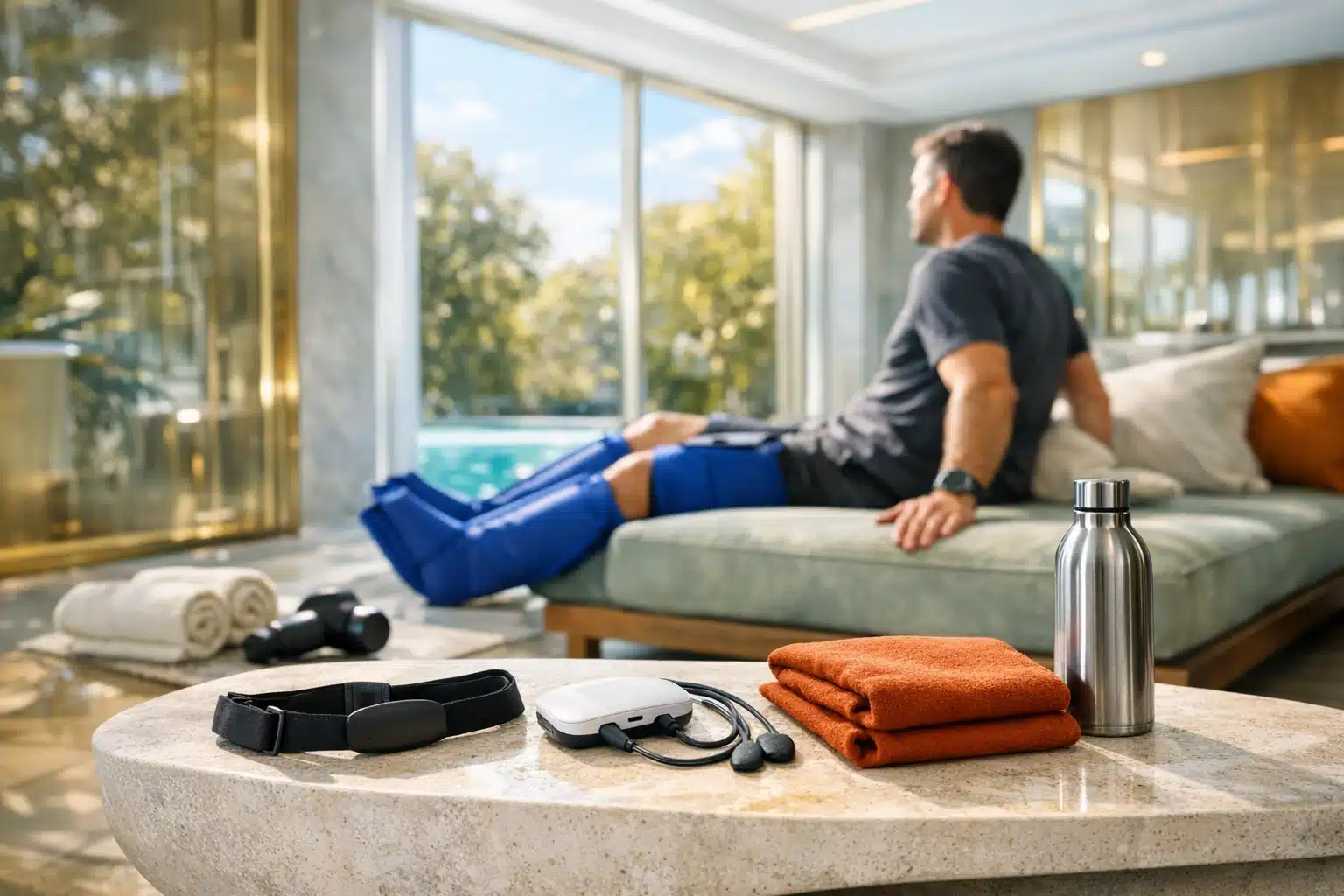
Recovery devices occupy one of the busiest corners of the wellness market, and for good reason. Men who sit for long hours, train regularly, commute, or carry physical stress often feel the appeal immediately. A massage gun after leg day, a heating pad on a stiff lower back, or a TENS unit after a flare of muscle tension can feel less like luxury and more like maintenance. The category is broad, but the best-known tools include percussive massage devices, foam rollers, TENS or EMS units, compression boots or sleeves, and hot-cold therapy products.
Percussive massage devices are among the most visible. They can help some users temporarily reduce the sensation of muscle tightness and improve warm-up or cool-down comfort. They are convenient and easy to use, but more force is not always better. Pressing aggressively into sore tissue can irritate rather than help, especially over bony areas, fresh injuries, or sensitive spots. Foam rollers are lower-tech, cheaper, and often more versatile, though they demand more patience. The choice between them often comes down to preference: the massage gun is the power tool; the foam roller is the hand tool that still gets the job done.
TENS and EMS devices are often confused, yet they are not identical. TENS is generally used for pain modulation by delivering mild electrical stimulation, while EMS is more associated with muscle activation. Some people find TENS helpful for short-term relief, especially for recurring discomfort, but outcomes vary and it is not a fix for the underlying cause. Compression products, including boots and sleeves, are popular with runners and heavy lifters because they may help with the sensation of recovery after intense sessions. Heat therapy tends to be preferred for stiffness, while cold is more often used after acute strain or to calm swelling.
A simple comparison looks like this:
• massage guns: fast, convenient, good for local muscle soreness, but easy to overuse
• foam rollers: affordable and effective for broad muscle groups, but less targeted
• TENS units: useful for some forms of short-term pain relief, but not a universal answer
• compression systems: comfortable for recovery routines, though premium models can be costly
• heat and cold tools: accessible, practical, and often underrated
Safety matters here more than advertising suggests. Men with circulatory issues, nerve problems, recent injuries, blood clot risk, implanted medical devices, or unexplained pain should get advice before experimenting with electrical stimulation, intense compression, or aggressive massage. Also, recovery devices work best when they support the basics rather than replace them. Sleep, progressive training, hydration, nutrition, and reasonable workloads still do most of the heavy lifting. A massage gun can be helpful, but it cannot negotiate with a training plan that treats the human body like spare machinery. The smartest recovery purchase is the one that fits your actual routine and gets used consistently without making things worse.
4. Pelvic, Urinary, and Intimate Wellness Devices: Useful Tools, Bigger Questions
This is the part of the category that many men are curious about and often hesitant to discuss. Pelvic, urinary, and intimate wellness devices can include pelvic floor trainers, biofeedback tools, penis pumps used as vacuum erection devices, support rings sold for intimate use, vibratory stimulation devices used in some rehabilitation settings, and app-connected products marketed for sexual wellness. Because the subject feels private, the market attracts both serious products and noisy gimmicks. The difference between them matters.
Start with pelvic floor health. Men can experience pelvic floor dysfunction, urinary leakage, chronic tension, or weakness, particularly with aging, after prostate treatment, or in the context of ongoing pelvic pain. In some cases, clinician-guided pelvic floor therapy and biofeedback can be useful. That guidance matters because not every pelvic issue comes from weakness. Some men actually need relaxation and coordination rather than more squeezing exercises. This is one reason generic advice can miss the mark. A device that promises to “train” the area is only as helpful as the problem it is trying to solve.
Vacuum erection devices deserve a measured explanation. They are not novelty products when used in a medical context. They can be recommended as a non-drug option for some men with erectile dysfunction and may be used in certain rehabilitation plans under professional guidance. However, quality, instructions, comfort, and expectations vary widely. Consumer versions can differ from medical-grade devices in materials, pressure control, sizing, and overall safety. Men with pain, bruising, bleeding risk, significant curvature, or complex medical conditions should get proper advice before using one. Good design emphasizes control and safety; bad design tends to emphasize dramatic claims and very little else.
When comparing intimate wellness devices, a few buying rules help:
• choose body-safe materials and clear cleaning instructions
• look for transparent warranty, sizing, and pressure information
• avoid miracle claims, vague science, and before-and-after promises
• prefer companies that explain intended use without embarrassment or hype
• treat app-connected products like health tech and review their privacy practices
Privacy is a hidden issue in this category. Some intimate wellness devices store usage data, pair with apps, or require account creation. That may seem harmless until a user realizes how personal the information is. If a product collects intimate data, read the privacy policy with the same seriousness you would give a financial app. In short, this area is best approached with calm judgment. The goal is comfort, function, or support, not insecurity-driven shopping. A well-chosen device may be useful. A poorly chosen one can waste money, create discomfort, or delay a needed medical evaluation.
5. Conclusion for Men Shopping the Category: Buy for a Clear Need, Not for Hype
If you are the kind of buyer who reads the back of the box, checks three reviews, and still keeps one eyebrow raised, that instinct will serve you well in the male wellness device market. The smartest way to approach this category is to start with a specific problem or goal. Do you want better sleep consistency, less muscle tightness after training, improved awareness of stress, support for bladder or pelvic concerns, or an informed way to explore intimate wellness? When the purpose is clear, the options become easier to compare and the marketing becomes easier to ignore.
There are a few signs of a stronger product. It explains what it does in plain language. It does not confuse “wellness” with guaranteed medical outcomes. It offers sizing, materials, instructions, and cleaning guidance openly. It respects privacy if it connects to an app. Ideally, it also makes room for the possibility that a user may need professional help, especially if symptoms are persistent, painful, or getting worse. That kind of honesty is not boring. It is one of the strongest quality signals available.
A useful final checklist looks like this:
• define the exact problem you want the device to help with
• decide whether you need a lifestyle tool or a medically oriented product
• compare evidence, build quality, return policy, and privacy practices
• avoid devices that promise dramatic transformation in unrealistically short timelines
• speak with a clinician when symptoms suggest an underlying medical issue
For most men, the best wellness device is not the most expensive one or the one with the most dramatic branding. It is the one that fits a real routine, solves a real friction point, and encourages better habits without creating new problems. A ring that nudges earlier bedtimes may be more valuable than a drawer full of underused gadgets. A simple heating pad may outperform a flashy recovery machine that feels impressive for four days and forgotten by day five. And in intimate health, a medically sound, clearly explained product will almost always beat a secretive “miracle” device wrapped in insecurity.
The bigger idea is simple. Technology can support men’s health, but it works best when paired with honesty, patience, and a willingness to seek proper care when needed. If you shop with clear goals and grounded expectations, wellness devices can become practical allies rather than expensive distractions. That is a much better deal than hype, and your nightstand, gym bag, and future self will probably agree.